The industry and logistics segment is showing positive signs despite fewer major transactions
The transaction volume for industrial and logistics properties in Denmark in the first eight months of the year totaled DKK 4.2 billion, which is slightly below the figure for the same period last year. However, the number of transactions has remained largely unchanged, suggesting that many of the larger deals are yet to materialise. With international investors returning to the market, however, this trend could reverse, according to EDC Poul Erik Bech, who currently has several major industrial and logistics properties for sale and to let across Denmark.
New figures from Erhvervsmæglernes Branchedata (collaboration between EDC and 5 other leading commercial real estate agents in Denmark) shows that the total transaction volume for the commercial property market in the first eight months of the year stood at DKK 45.7 billion.
This is DKK 1.2 billion higher than in the same period last year and marks the first time this year that the total figure has exceeded the previous year. With a transaction volume of DKK 4.2 billion, the industrial and logistics segment remains below last year’s level. However, accounting for 9% of the total transaction volume, industrial and logistics properties maintain their position as the third-largest segment, surpassed only by residential rental properties (68%) and office properties (11%).
Joseph Alberti, Head of Research at EDC Poul Erik Bech, explains: “Historically, the industrial and logistics segment has proved very resilient, particularly in the wake of the pandemic. We are still seeing strong demand for industrial and logistics properties. This trend should also be viewed in the context of the fact that the industrial and logistics segment has enjoyed some exceptionally strong years since 2021 and looking ahead to 2025, during which it has accounted for an average of around 20% of the total transaction volume.”
“We are now seeing signs that we are back at the level seen in 2019 and 2020, at around 9-10%. However, the picture may, of course, be different when the year’s total transaction volume is finalised at the end of the year. The residential segment is historically significant in 2026, and when it is primarily former industrial areas that are being converted for residential use, this creates a shift in transaction volume between the two segments.”
Further signs of stability
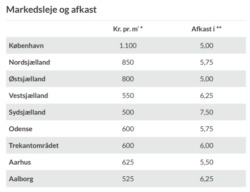
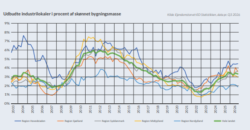
The industrial and logistics market continues to show signs of stability, emphasises Joseph Alberti: “The vacancy rate in the third quarter of 2026 stands at 3.3%, which is slightly below the average for the past 20 years. Market rents and market prices are also largely unchanged compared with previous years, whilst yield requirements have likewise proved stable and are expected to remain so in the coming years.”
“However, this is also a segment that is becoming increasingly nuanced, and where we are seeing growing differentiation between newer, modern properties and those that are less up to date. Investors and users are competing for the new, modern logistics properties situated close to essential infrastructure, such as motorways, and preferably close to the major cities and key logistics corridors. Conversely, the appetite for investment in older industrial properties is close to an all-time low and is usually only realised if there is significant potential for modernisation and energy optimisation of the property.”
Improved performance in the past month
The transaction volume in the industrial and logistics sectors over the first eight months of the year is also a consequence of fewer major transactions, emphasises Niclas Carsten Holm, Director of Research at EDC Poul Erik Bech:
“There is still good momentum in the market. The number of transactions in the industrial and logistics sectors is roughly on a par with last year, but the big deals are yet to materialise. In fact, we have not yet seen a transaction in the billion-class in the industrial and logistics sectors this year.”
“Part of the explanation is that international deals in January–August 2026 accounted for just over 20% of the total transaction volume, which is well below the 40–50% we have seen in recent years. However, August showed the first signs that international capital is returning to the Danish commercial property market, as foreign investors accounted for 33% of the total transaction volume. This trend was particularly noticeable in the industrial and logistics market, which accounted for 10.4% of the total transaction volume in August. Within the industrial and logistics segment, international investors accounted for 73.2% of the month’s transaction volume.”
“This is a pattern we recognise from previous years, when the industrial and logistics segment has been the second most sought-after segment amongst international investors. If geopolitical uncertainty eases, international investor interest will naturally pick up again and pave the way for more of the larger transactions. It is also important to emphasise that the lower level of cross-border activity is not limited to Denmark but is affecting the commercial property market across large parts of Europe.”
At EDC Poul Erik Bech also has several large industrial and logistics properties available for sale and to let. View them here.